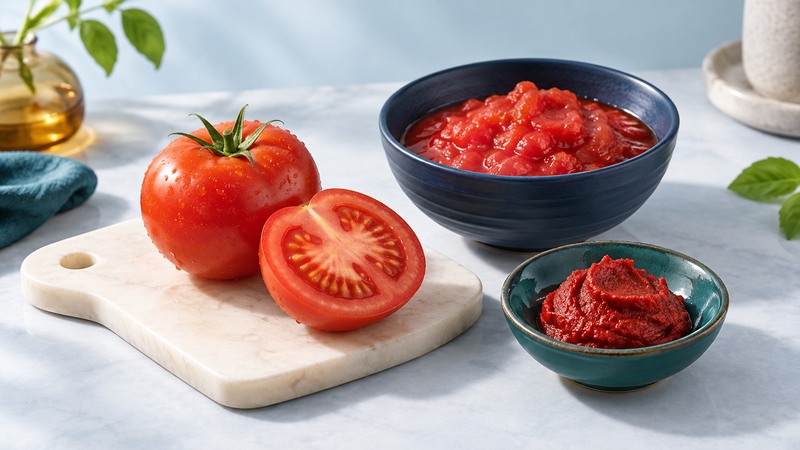
Choose tomatoes by the job: a ripe slicer for a sandwich, canned crushed tomatoes for a dependable sauce, and paste for concentrated flavor in a small amount of liquid. Ripeness, water content and the form you buy matter more in the kitchen than a single “best” variety.
Choose the form for the dish
Scroll the table sideways. With a keyboard, focus the table and use the arrow keys.
| Form | Useful for | What to check |
|---|---|---|
| Fresh slicers or beefsteaks | Sandwiches, sliced salads, stuffed tomatoes | Choose fragrant, unbruised fruit; blot slices if their juice would soak the bread. |
| Cherry or grape tomatoes | Snacks, halved salads, quick skillet sauces | Choose intact fruit; cut to an appropriate size for the person eating it. |
| Plum or paste tomatoes | Roasting or cooking down | Often fleshy with less loose juice; expect variation between varieties and ripeness. |
| Canned whole, crushed or diced | Sauces, stews and soups throughout the year | Crushed is convenient for sauce; diced products with calcium chloride may keep their shape. Read added salt and seasonings. |
| Tomato paste | Building a concentrated tomato base | Measure by tablespoons; it needs liquid or other moist ingredients to become a sauce. Follow the opened-package storage directions. |
For fresh fruit, look for taut skin and gentle firmness with some give when ripe. University of Minnesota’s tomato selection guide covers quality and preparation. For canned products, choose the texture and ingredients your recipe needs, then compare sodium for the amount you will use with the equal-portion label method.
Separate ripening from cut-food storage
- Still ripening: leave sound, mature tomatoes at room temperature away from direct sun and check daily. Color depends on variety, so look for softening and aroma too. UMN’s harvest guidance explains ripening tomatoes after picking.
- Ripe and whole: plan to eat soon. Refrigeration can buy time when fruit is already ripe; let only the portion you will eat lose its chill before serving. Check daily for deterioration.
- Cut or prepared: refrigerate at 40°F or below, including salads and salsa. Wash whole tomatoes under running water before cutting, dry them, and use clean hands, boards and knives. FDA’s produce handling guidance distinguishes whole produce preparation from refrigerated fresh-cut food.
A tomato salad for two
Ingredients: 300 g ripe tomatoes, 1 tablespoon olive oil, 1 teaspoon wine vinegar, 1 tablespoon chopped basil or parsley, and salt and pepper to taste. Cut into bite-size pieces, toss with oil and vinegar, then add herbs. Taste before salting. Serve with bread for the juices; for a sandwich filling, drain the dressed tomatoes first. This is a suggested kitchen combination, with US spoon measures.
A small, adaptable canned-tomato sauce
Starting batch: one 14–15-ounce can crushed tomatoes with its juice, 1 tablespoon olive oil, 1 small minced garlic clove and ¼ teaspoon dried oregano. Use a small saucepan and a spoon; allow about 25 minutes. This independently composed method makes roughly 1–1½ cups, depending on reduction.
- Warm oil over medium-low heat. Stir garlic for about 30 seconds, just until fragrant, then add the tomatoes and oregano.
- Bring to a gentle simmer. Cook uncovered 15–20 minutes, stirring and lowering heat if it spits. Stop when a spoon drawn across the pan briefly leaves a trail.
- Taste and season. Add water a tablespoon at a time if too thick; simmer longer if too loose. Measure the finished yield if dividing into portions.
Use it with cooked pasta, beans or vegetables. For pizza toppings, keep the sauce thick and use a modest amount. Yenra has not kitchen-tested these two suggested preparations; taste and texture checks let you adjust for the tomatoes you buy. Refrigerate or freeze the sauce using the timing below. For shelf-stable home canning, use a complete tested preservation recipe with its required acidification and process; this sauce is intended for ordinary cooking.
What cooking changes—and what evidence can establish
Cooking softens tomato tissue and removes water as steam, changing texture and concentration. Lycopene is one of the pigments in red tomatoes. The National Cancer Institute’s lycopene evidence summary describes differences in absorption from processed foods and mixed findings in human research. An absorption measurement or a laboratory antioxidant result does not establish that a tomato dish prevents or treats cancer. Choose raw or cooked tomatoes for the meal you enjoy, and treat disease-related decisions separately with a clinician.
Refrigerate promptly in shallow covered containers within two hours, or one hour when the surroundings exceed 90°F. Keep at 40°F or below and use within 3–4 days, or freeze. Reheat cooked leftovers to 165°F. USDA’s leftover guidance explains cooling and reheating.