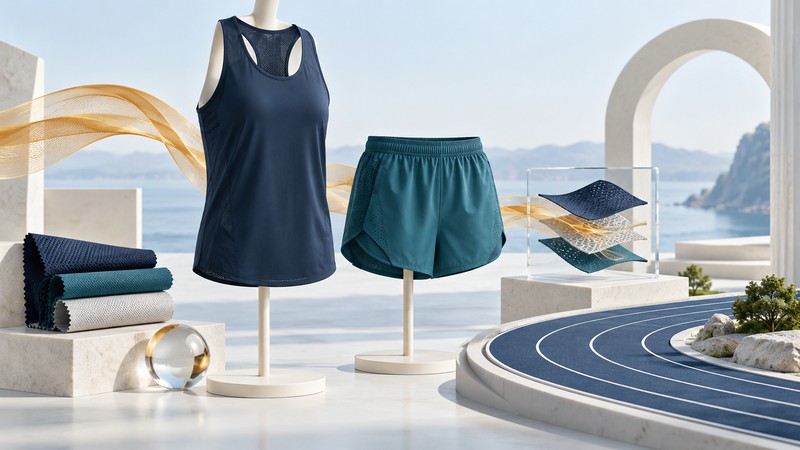
An Olympic uniform must work for a particular athlete, event and set of movements. Nike’s kit development provides a useful case study in how designers combine athlete feedback, fabric choices and visual identity. To evaluate the result, separate the design process from evidence about measured performance.
Start with a documented kit and year
In its April 2024 national and federation kit announcement, Nike described using athlete feedback and 4D motion-capture data. It reported nearly 50 athletics pieces and a dozen competition styles, offering options for different events, bodies and preferences. That is a dated account of the company’s design approach.
The announcement also presents Nike’s claims about breathability and performance. It is useful evidence of what the company designed and intended, but it does not supply a controlled comparison proving a race-time benefit for every garment or athlete.
When identifying a uniform from a photograph, record the team, Games, event and garment version. A retail shirt sharing the team’s colors may differ from competition equipment. Check the actual product specification before transferring technical claims from one to the other.
Ask which problem the garment addresses
| Design goal | What to examine | What would support the claim |
|---|---|---|
| Freedom of movement | Cut, stretch, seams and coverage through event-specific movements. | Fit trials with the actual wearer and useful feedback. |
| Moisture management | Fabric construction and the conditions in which it is worn. | A defined test method and relevant environmental conditions. |
| Aerodynamic behavior | Surface, fit, posture and speed. | Appropriate wind-tunnel or field comparisons with uncertainty. |
| Visual identity | Team colors, graphics and recognizability. | Documented design intent and the applicable uniform requirements. |
On a narrow screen, swipe the table sideways or focus it and use the arrow keys.
A garment can meet one goal while presenting a tradeoff in another. An athlete may prefer more coverage, a different seam position or a less restrictive silhouette. Evaluate those needs directly rather than assuming that the tightest or most technical-looking option is best.
A fit check should include the motions that matter: arm drive, overhead reach, bending or a throwing position, as appropriate to the sport. Record where fabric shifts, gathers or distracts the wearer. Compare the same size guidance and intended layers, then change one feature at a time.
Keep laboratory findings within their tested conditions
Original research illustrates why a fabric cannot be ranked by appearance alone. A 2023 study by Suzuki, Yamanobe and Maeda tested grooved fabrics on cylinders and full-scale skater models in a wind tunnel. It found that selecting between the tested fabrics required attention to speed, athlete dimensions and atmospheric conditions.
This was speed-skating research on specified samples and models, not a validation of Nike’s Olympic athletics kits. Its broader lesson for readers is methodological: identify the garment, geometry, speed and environment in a test before applying the result elsewhere.
Likewise, a static fabric sample, a mannequin and a moving athlete answer different questions. A repeatable difference in one setup can be useful engineering evidence while still leaving movement, fit and race conditions unresolved. The wind-tunnel guide explains how to read those comparisons.
Make a useful apparel comparison
Record the exact model and size, the movements tried, the conditions and the wearer’s observations. If a seller supplies a performance percentage, ask for the baseline, protocol, sample and measured quantity. “Less drag,” “faster drying” and “faster race time” require different evidence.
For competition, confirm the relevant team and event uniform requirements before purchase or alteration. Use the garment’s own care instructions and keep an eye on changes in fit as it wears. A useful choice brings together suitable movement, acceptable comfort, required coverage, documented eligibility and understandable evidence.
For a parallel example in another environment, see the Fastskin guide, which separates swimsuit history, performance testing and competition approval.