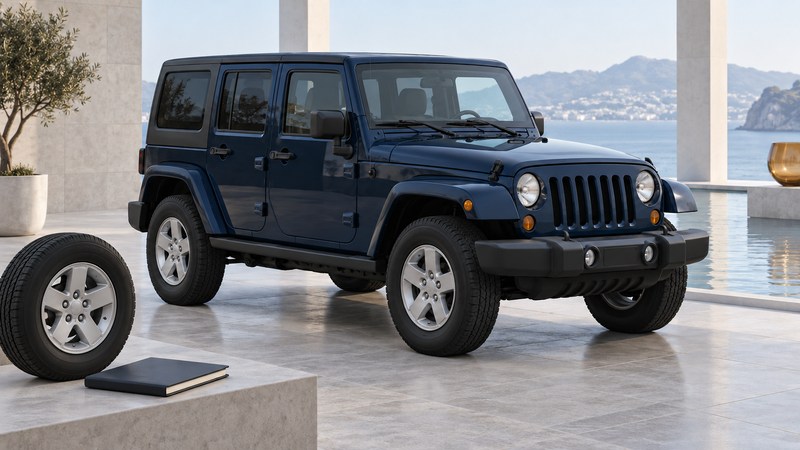
Assess a 2007 Wrangler Unlimited in three layers: its factory configuration, its present mechanical and structural condition, and the changes made since new. Keep a separate record for the roof and removable equipment included in the sale.
This guide focuses on the U.S.-market 2007 four-door Unlimited. The name also appears on other model years with different bodies and equipment. Confirm the model year and configuration through the VIN and factory records before using specifications or ordering an inspection.
Confirm what the vehicle was built with
Jeep's 2007 Unlimited specifications list a 3.8-liter V6, a standard six-speed manual or optional four-speed automatic, and both two-wheel-drive and four-wheel-drive configurations. A Wrangler badge by itself leaves the drivetrain question open.
On a narrow screen, scroll the table sideways. Keyboard users can focus the table region and use the arrow keys.
| Item | Factory distinction | Evidence to gather now |
|---|---|---|
| Body | Four-door Unlimited with a 116-inch wheelbase. | VIN/model-year record and matching body. |
| Transmission | Six-speed manual or four-speed automatic. | Installed unit, service history and any replacement record. |
| Drivetrain | 2WD, or part-time 4WD with the applicable transfer case. | Build record, controls and inspector's component identification. |
| 4WD system | Command-Trac or the Rubicon's Rock-Trac configuration. | Actual transfer case and axle equipment, including later changes. |
Ask a Jeep dealer to help resolve missing factory equipment information. Record the installed tire size, axle or suspension changes and added accessories separately so the factory specification does not hide later work.
Commission an inspection suited to its use history
Ask about road, trail, towing, storage and water-exposure history, then request supporting service and repair invoices. The FTC's used-car guidance supports an independent inspection even when a seller provides a history report or certification.
Have a qualified inspector examine the frame and body structure, corrosion, impact or repair evidence, steering and suspension, brakes, tires, driveline, fluid leaks and electrical faults. Include accessible underbody areas and mounting points in the agreed scope. Record what could not be inspected and whether further assessment is needed.
Arrange an appropriate road test and diagnostic scan with the provider. Explain any vibration, wandering, clunk, warning or shifting complaint in the circumstances where it occurs. Ask for a diagnosis or next test before accepting a parts list as the explanation.
The 2007 Wrangler owner manual assigns normal hard-surface driving to 2H and describes 4H/4L for suitable loose or slippery surfaces. Have a knowledgeable provider assess the fitted 4WD system under the manual's conditions. Do not engage part-time 4WD on dry pavement simply to demonstrate that a lever moves.
Turn a modification list into inspection questions
For each lift, wheel/tire change, bumper, winch, axle change or wiring addition, request the maker, part identification, installation invoice and any follow-up alignment or calibration record. Ask the inspector to assess mounting, clearances, steering and braking behavior, wiring protection and compatibility as appropriate to the change.
Keep claimed benefits separate from demonstrated condition. An accessory's purchase price does not establish its value to your use. An undocumented modification may create an unresolved inspection task or a restoration cost. Obtain a written scope before deciding whether to keep it.
For towing, consult the manual's configuration-specific limits and the actual vehicle and equipment labels. Have the proposed trailer and load checked against every applicable limit. A hitch or accessory installation alone does not establish a towing rating.
Inventory the roof and included pieces
List the installed top and any second top, panels, windows, hardware and storage equipment included in the sale. Ask the owner or qualified provider to demonstrate only the applicable manual procedure. Check fit, latches, seals, visible damage and signs of water entry without dismantling unfamiliar components.
The owner manual explains that soft and hard tops provide weather protection rather than structural crash protection. Follow the vehicle's occupant-restraint instructions regardless of top choice. Treat missing hardware, an insecure panel or unexplained moisture as a question to resolve before use.
Keep the findings and recall checks together
Use the VIN in Mopar's recall lookup and NHTSA's search. NHTSA notes limits including some campaigns more than 15 years old; ask a Jeep dealer to reconcile older recalls and repair evidence. Record each search date and follow any instructions for the vehicle.
Download the Wrangler inspection record. Group the result into immediate concerns, needed work, routine upkeep and unresolved diagnosis. Use dated, itemized estimates and keep assumptions visible. See planning an independent vehicle inspection and roof condition and moisture observations for related preparation.
Explore Autos: vehicle guides, technology and design · Cars: buying, maintenance and ownership