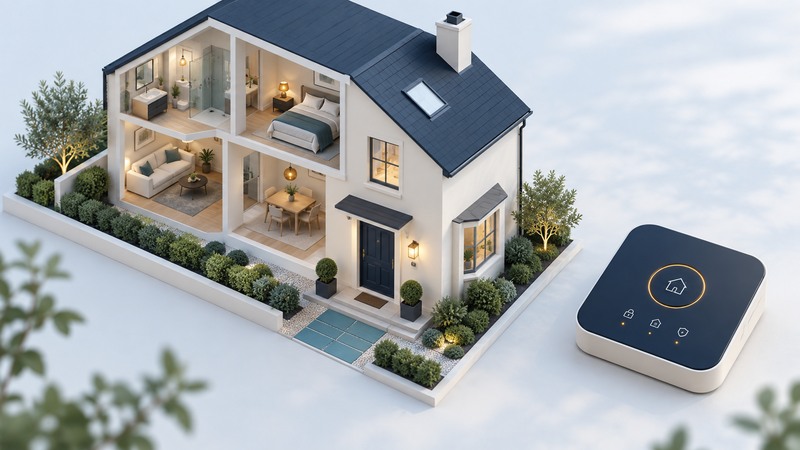
Start a home-security plan with the places people enter, the routines your household can maintain, and what should happen when something needs attention. A camera, lock and alarm each solve a different part of that problem.
Walk through your own home in daylight and after dark. Include everyone who must operate the system, and ask a landlord before changing a rented property's fittings. This is a planning guide; have suitable local professionals assess lock compatibility, wiring, fire escape and jurisdiction-specific requirements.
Walk the property before shopping
List doors, accessible windows, garage connections and shared entrances. Check whether each closes and locks reliably in ordinary use. Record loose hardware, poor alignment and keys that are difficult to operate. A repair can be more useful than adding an unrelated device.
Look at the approach after dark: can residents identify the doorway, use the lock and see someone standing there? Adjust lighting to serve those tasks while considering neighbors and glare. Review what visitors can see through windows and where packages are left.
Police.uk's door and window guidance treats the condition and use of entrances as a starting point. Its named hardware standards are UK-specific; use local requirements and a qualified installer for your property.
Keep escape routes usable. Security modifications must support safe exit by everyone in the household. The U.S. Fire Administration's home escape planning guidance calls for planning and practicing ways out. Resolve a lock or window change that could obstruct escape before installing it.
Match each option to its job
| Measure | Purpose | Check before relying on it |
|---|---|---|
| Locks and entrance repairs | Control entry and improve consistent closure. | Each resident can secure and exit the home; hardware fits the door and local requirements. |
| Lighting | Make approaches and activity easier to see. | Observe the entrance after dark; check glare, shadows and the intended control schedule. |
| Door or motion sensors | Detect a defined event and trigger a response. | Use the manufacturer’s test mode with the monitoring provider informed first. |
| Cameras | Help inspect an event and retain a useful recording. | Review actual day/night footage, access permissions and an exported clip. |
| Monitoring service | Receive selected alarms and carry out an agreed response. | Understand verification, contact order, dispatch policy, outages and local rules. |
A movement notification tells you that the system detected something under its configured rules. Check what occurred before drawing a conclusion. Consumer object labels and person detections can make mistakes; evaluate the recorded scene.
Choose a routine the household can follow
Decide who locks up, who can change settings and who answers an alert. Separate resident access from temporary visitor access where the system supports it. Remove a visitor's access when the need ends, and keep a supported way to enter during battery, phone or network trouble.
Practice arming, disarming and canceling a mistaken alarm using the provider's test arrangements. Never trigger an unannounced emergency dispatch as a test. Ask the local alarm administrator about permits, false-alarm charges and response rules; they vary by jurisdiction.
For cameras, identify the scene you actually need: an entryway, package area or driveway. Keep private indoor spaces and neighbors' private areas out of the frame. Audio recording has separate legal implications; establish the applicable rules before enabling it. Use the network camera guide for account, network and recording checks.
Compare the complete agreement
Ask each company to quote the same scope: equipment, installation, recurring monitoring, recording storage, maintenance, replacement batteries and service calls. Record the contract term, renewal process, cancellation cost, moving arrangements and what still works when a subscription ends.
The FTC's security-system shopping guidance recommends checking providers and understanding the contract before signing. Verify an unexpected sales visit with the company using a number you obtain independently. A claim that your existing provider has changed hands deserves confirmation.
Ask the provider to describe a power outage and an internet outage separately. Which sensors, recording functions and notification paths continue? What backup power or cellular service is included, for which devices and for how long under the stated test conditions? Get model-specific answers in writing.
Turn observations into a short action list
Pick the few issues with the clearest practical benefit, then revisit after moving, changing household members or replacing equipment. Keep the completed assessment private because it describes your property and routines.