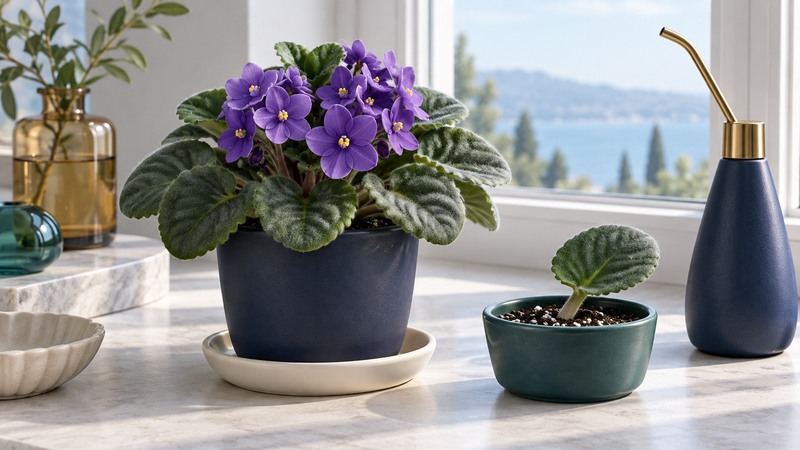
African violets can flower repeatedly indoors when their light, root moisture and growing space are in balance. Start with those conditions when blooms stop. A stronger fertilizer is rarely a useful first experiment when the pot is staying wet or the plant is sitting in a dim corner.
Establish a simple care routine
Place the plant in bright, gentle light away from scorching sun and cold drafts. Check the potting mix before watering, let surplus water drain, and watch the new leaves at the center of the rosette. Keep a short record when you change the location or watering method.
The Royal Horticultural Society's African violet guide places these plants in Streptocarpus, formerly Saintpaulia. Both names still appear on labels. It describes their preference for warmth, indirect light and a moist but aerated growing medium.
At purchase, choose a plant with sound leaves and an intact center. Inspect the undersides and growing point for insects or damage. Keep a new arrival apart from established houseplants while you watch its condition, and retain the cultivar label if supplied.
Balance light and moisture
Minnesota Extension describes bright locations, a well-drained soilless mix and draining pots. Under grow lights, its flowering guidance allows a daily dark period as well as light. Follow your fixture's distance instructions and adjust gradually; the plant's position relative to the window or lamp matters more than the room's general brightness.
Use room-temperature water. Apply it to the mix carefully, keeping the center from remaining wet. With bottom watering, allow the mix to take up moisture and then remove the pot from the water; a pot sitting indefinitely in a filled saucer can still become waterlogged. A purpose-designed wick system requires a suitable mix and setup of its own.
Check before each watering. Lift the pot to learn its weight when freshly drained and when it is becoming dry. Feel the surface without damaging leaves. Keep the root zone from becoming either persistently soggy or completely parched. Root rot associated with overwatering is a common cause of failure, according to Minnesota Extension.
When flowers stop, check in this order
- Light: Has the season changed, a curtain closed, or the pot moved farther from the window? Improve exposure gradually while protecting leaves from strong sun.
- Root conditions: Does the pot drain? Is the mix staying wet for a long time? Inspect an inner pot hidden inside a decorative container.
- Pot size: Did a recent move into a much larger pot leave a small root system surrounded by wet mix?
- Feeding: Read the fertilizer label and review what has already been applied. Use the stated rate for the plant and method.
- Growth and health: Look for new leaves, crowded side growth, damaged roots or pests. Flowering takes time to respond after conditions improve.
Penn State's flowering guide discusses light, fertilizer and oversized pots. Its useful pot-size rule of thumb is roughly one-third of the leaf-rosette diameter. Treat that as a starting guide alongside the root ball and variety, especially for miniature or trailing plants.
Interpret symptoms before choosing a treatment
| Symptom | Check | Useful response |
|---|---|---|
| Wilt with damp mix | Drainage, roots and the hidden outer pot | Stop automatic watering; inspect for failing roots |
| Wilt with very dry mix | How long the pot has been dry | Rewet gently, drain, and monitor recovery |
| Pale or scorched areas after a move | Direct sun or lamp proximity | Reduce the sudden exposure and watch new leaves |
| Few flowers with otherwise sound growth | Light, recent repotting and feeding history | Work through the flowering checks |
| Crowded center or unusual distorted growth | Suckers, pests or growing conditions | Examine closely; seek a reliable diagnosis before applying a product |
A photograph can show a pattern, but moisture history and root condition often determine the next step. Keep a struggling plant separate if pests or disease are suspected.
Refresh the mix without overpotting
Prepare a clean draining pot, fresh African-violet mix and a clean work surface. Gently ease the plant out, supporting its root ball. Remove loose exhausted mix and inspect the roots. Use an appropriately small pot, position the crown at the surface rather than burying it, and settle fresh mix around the roots without packing it hard.
Water carefully and let the pot drain. Return it to suitable gentle light and watch the new growth. Routine repotting can refresh the medium without increasing pot size. Penn State's houseplant repotting guide explains container choice, pre-moistening fresh mix and handling a root ball.
Start a plant from a healthy leaf
Choose a sound leaf with its stalk, cut it with a clean tool, and insert the stalk into a small pot of moist, free-draining medium so the leaf stays above the surface. A clear cover can retain humidity; keep it out of direct sun and check for excess condensation or decay. Vent it as needed and keep the medium lightly moist.
The RHS describes this leaf-cutting method. Wait for rooted young plantlets before separating them; allow each enough roots and leaves to establish in its own small pot. Label the parent and the date. Some named forms may vary when propagated from leaves, so use specialist cultivar guidance if exact flower characteristics matter.
For another indoor flowering plant, compare the distinct care needs in the orchid picture guide. For reference books, see building a useful gardening shelf.